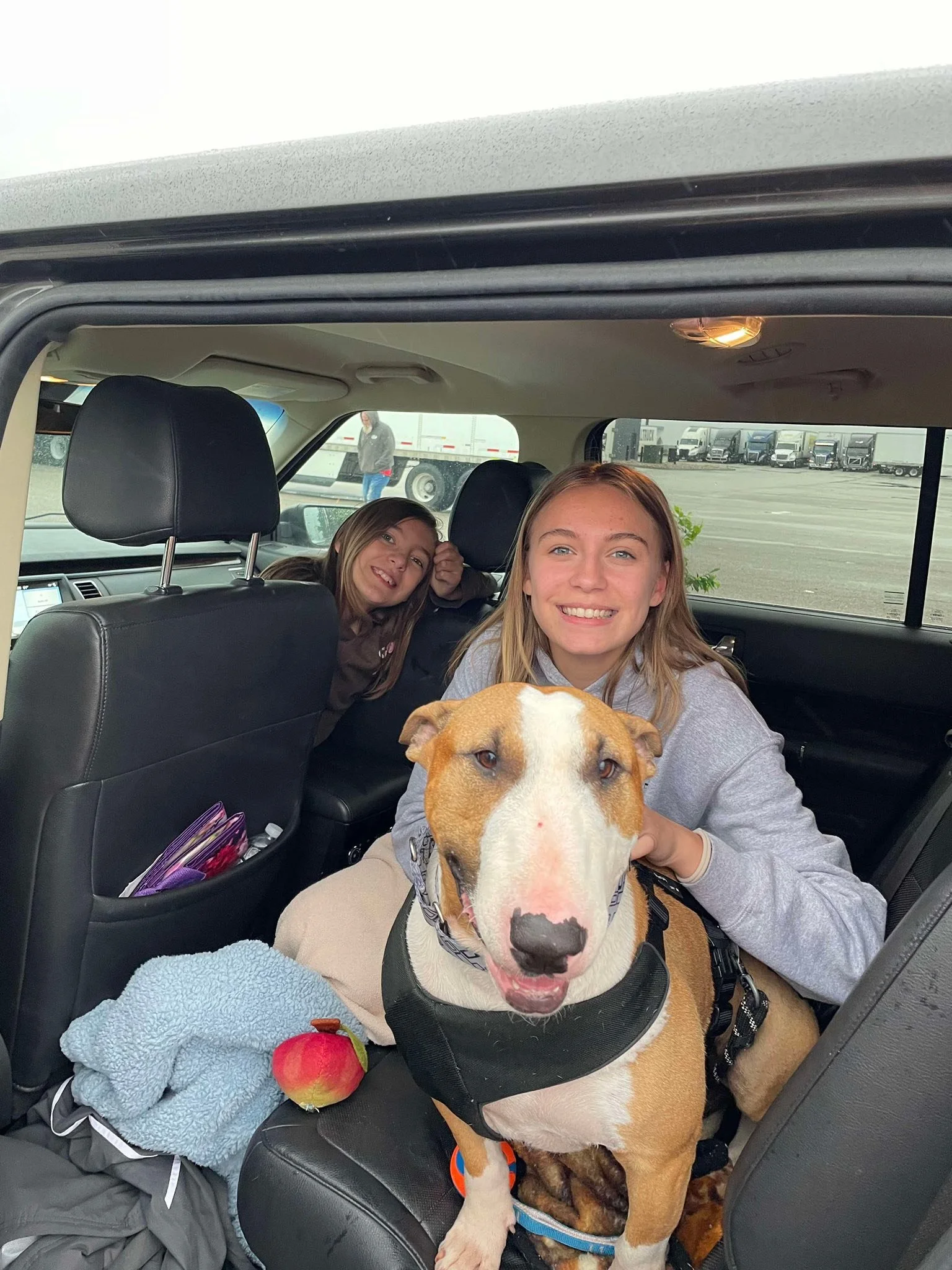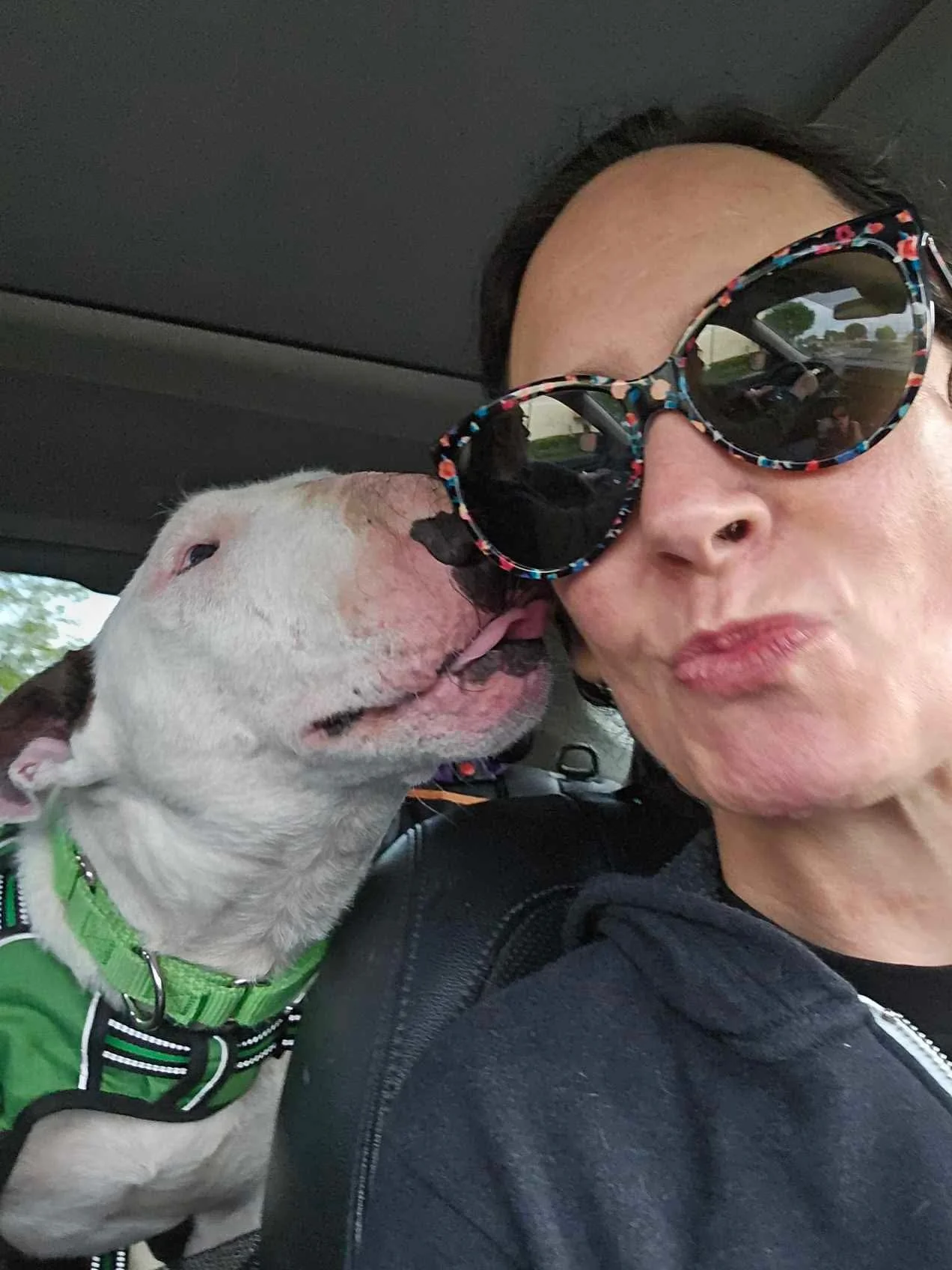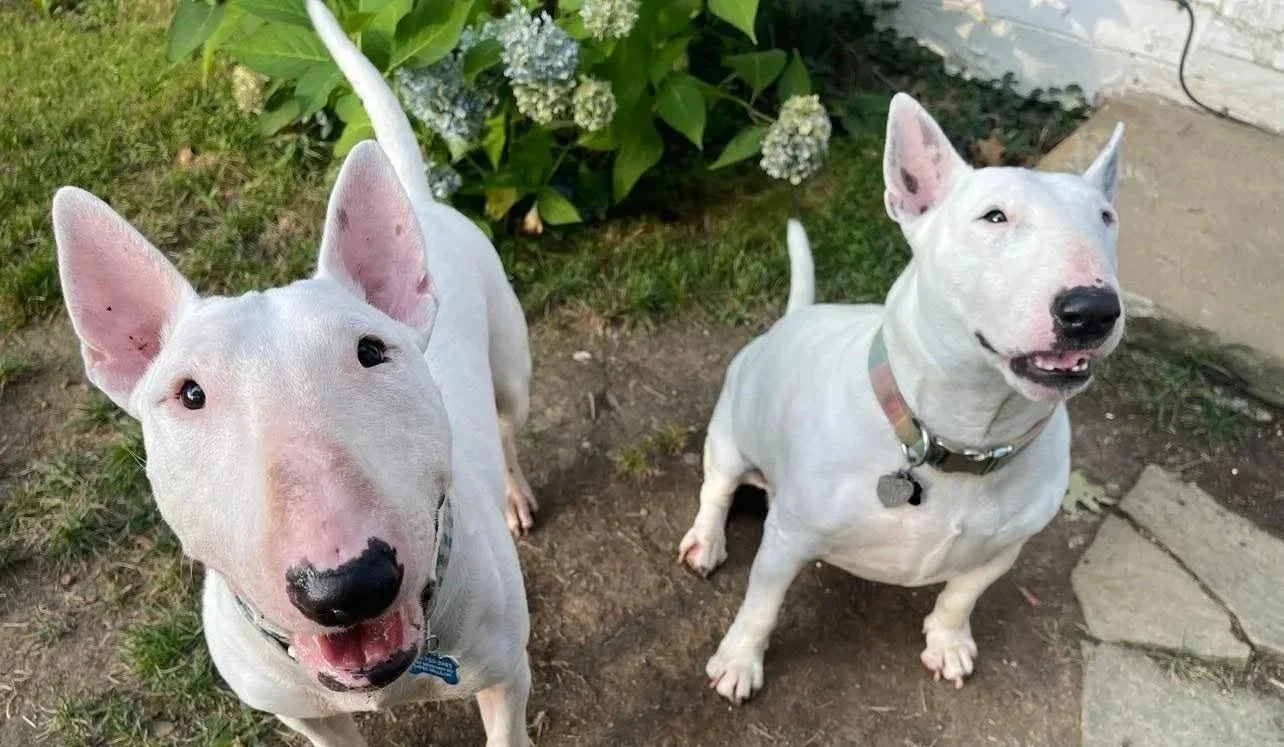
Height: 20-22”
Weight: 50-70lbs
Coat: Short
Colors: Solid white, fawn, brindle, red,
black and smut
At a Glance
The ones that are prey driven cannot be trusted around cats or smaller animals, and some of them simply do not like other dogs. But people? That’s what they’re all about.
But, they’re also contrarian and often break their own stereotype. There have been Bull Terriers that have come through rescue that love cats, chickens and even pigs and other farm animals. There are dog friendly bull terriers that love all dogs. Love some dogs. Or only love the dogs in their own home, and not any other dog at all. There are female puppy mill breeders in rescue that have hated every variety of animal, but when they see a puppy have some genetic light switch flipped on, turning them into sweet and loving creatures.
Each one of these beautiful, stoic, jaunty little Bull Terriers in rescue might fit a certain profile but are unique and special individuals all the same.
To help in the endeavor of understanding and learning to live with this strange and unique breed, I highly recommend you find yourself a copy of “When Pigs Fly” by Jane Killion. It’s considered the treatise for those who wish to train and better understand, bull terriers and other stubborn breeds.
So You Think You
Want A Bull Terrier?
By Jane Messineo Lindquist (Killion) and Mark Lindquist
“Bull Terriers are robust, big-boned terriers who move with a jaunty stride suggesting agility and power. The breed’s hallmark is a long, egg-shaped head with erect and pointed ears, and small, triangular eyes that glisten with good humor. Coats come in two types: white; and any other color (including an attractive brindle striping), either solid or with white markings. A well-made Bull Terrier is the picture of muscular determination and balance. There are four keys to this breed’s happiness: early socialization with dogs and people; firm but loving training; ample exercise; and lots of quality time with his adored humans. If these requirements are met, there is no more loyal, lovable, and entertaining companion. This is the ultimate personality breed.”
That being said, the Bull Terrier Rescue Mission Inc. is a rescue. And while some may come close to fitting the breed standard, most do not. Whether due to irresponsible breeding, a tough neglected life, or simply being purchased for the wrong reasons and not trained, most Bull Terriers in rescue require a careful and nurturing hand.
But the Bull Terrier personality is strong. Their penchant for life, their preferences and unique individuality can be seen every year at an event called Silverwood. This is where all the well-bred, well raised “best of the best” compete in conformation, obedience, nose work etc. But even these Bull Terriers have a persona like no other. As evidenced in Photographer Gloria Anderson’s piece titled “2019 Naughty Dogs Silverwood/MBTCA 2019”.
You know how most dogs will want to do whatever their owners want to do?
How they’ll look at them to see if there’s any way for them to entertain? Well a Bull Terrier is the opposite of that. They expect their humans to entertain them.
They can be stubborn, unique, beholden to their own preferences, and are extremely human centric. In fact, if you can’t spend a lot of time with your bull terrier, it will suffer. They crave to be a part of the family, a part of “the action” and in the middle of it all. They don’t do well when left to their own devices and will suffer as “outside dogs.”
They can’t be trusted off leash, or unrestricted when home alone, can be very prey driven and like to put the wrong things in their mouth, all the time.
But if you celebrate them for their own special little quirks; instead of trying to bend them like a piece of steel, you will end up with a loyal and loving member of the family. A well raised “normal” bull terrier is a funny, unique, affectionate individual with zero sense of personal space. A dog that, while doing zoomies, can sense the fragility of its young or elderly humans, but not the structural integrity of sheet rock walls. A dog that can sleep through a burglary, seem deaf when you call out his or her name but be right behind you as soon as they hear fridge door open.
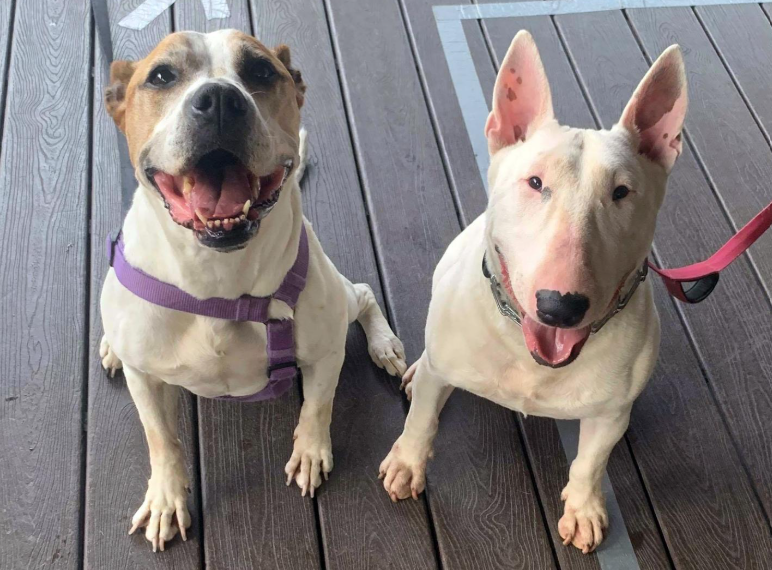
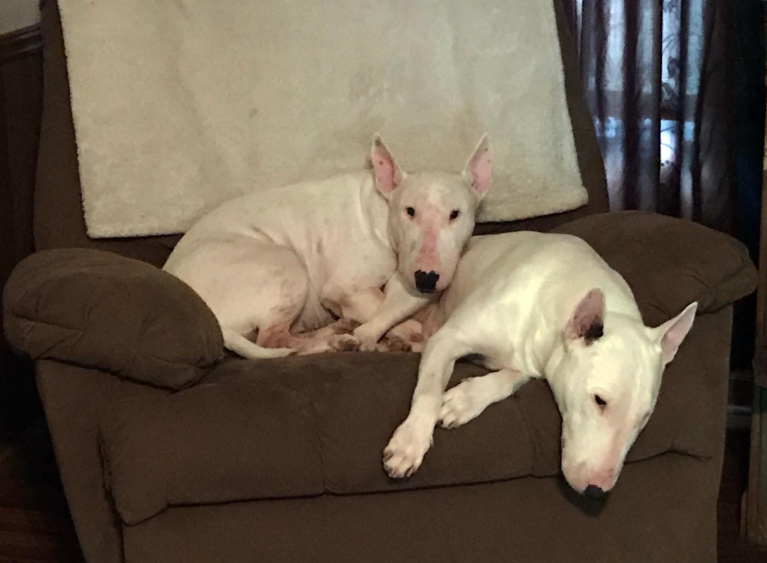
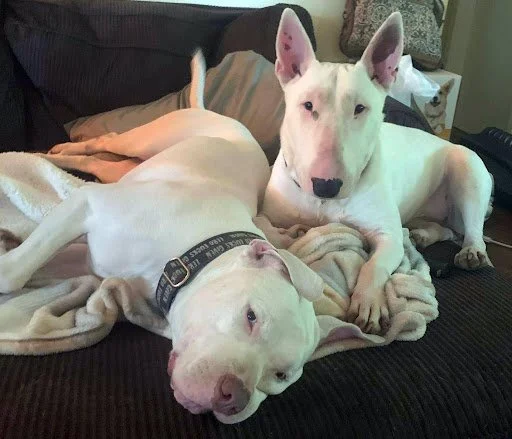
What is a Bull Terrier?
The Breeds illustrated here were developed over a century ago by dog breeders interested in perpetuating the desirable physical and personality traits of the old fashioned English Bulldog and various small terriers of the time. As you can see, each of the Bull & Terrier Breeds has some traits in common with it’s cousins, but there are also some very definite differences as well. To help you understand these subtle differences, we have described each breed briefly, directly quoted from Quoted directly from The Bull Terrier Club of America’s website.
The old fashioned bulldog was crossed with several types of small, smooth-coated terriers.
BTRMission rescues, rehabilitates, and finds homes for the following breeds:
-
The 19th century dog breeder who developed the White Bull Terrier wanted to create a “better fighting dog”, but for the most part, his creation was a flop as a fighter. Instead, the breed’s shining white coat earned it the admiration of the gentry of the day and the White Bull Terrier became a fashionable pet. Later, a colored variety of Bull Terrier was developed. This Colored Bull Terrier should not be confused with the Staffordshires or the Pit Bull, for he is every inch a Bull Terrier! Today, White and Colored Bull Terriers are bred for the show ring and the “living room couch.” The comedian of the Bull and Terrier family, the Bull Terrier is quite unique in appearance. No other breed of dog has the exotic, “Roman Nose” profile or the tiny triangular eyes of the Bull Terrier. The White Bull Terrier is ideally all white as the body, but sometimes has colored head marks. The Colored Bull Terrier comes in several colors, with red, brindle, black-brindle, or tri color being the most common. His average weight is 45 to 55 lbs, but may vary considerably. Bull Terrier’s ears are never cropped and most stand up naturally, although an occasional Bull Terrier will have one or both ears flopping, primarily due to immaturity or injury. Bull Terriers are of English origin.
-
From the American Kennel Club:
In most every way the Miniature Bull Terrier is a Bull Terrier, only smaller. These upbeat, mischievous dogs come equipped with terrier fire and fearlessness. If ever a dog could claim the title 'Clown Prince of Dogdom,' it's the Mini.
Like the class clown or an adorable toddler, the Miniature Bull Terrier is full of mischief and high spirits. With square bodies and egg-shaped heads, no other breed looks quite like it. These small, muscular terriers are strong, active, fearless, and endlessly entertaining. As fun as he is, it's not a good idea to let your Miniature Bull Terrier puppy get away with too many high jinxes. He'll be at his absolute best with early socialization and patient training; you couldn't ask for a more amusing companion.
We do not rescue or work with the following breeds:
-
This medium sized (40 lbs approx.) breed has the physique of an athlete; in fact, many Pit Bulls are prize winners in canine weight pulling competitions. Originally bred in the 19th century for dog fighting, this endearing breed can today claim an ardent following of breeders and pet owners who love their dogs and train them to be good canine citizens. The Pit Bull comes in a variety of colors and his ears may be cropped or left to fold naturally. He is a robust, intelligent fellow who makes an excellent pet when treated with kindness and responsibility. This breed was developed in North America.
-
This is a small breed weighing an average of 17 lbs. Nicknamed the “Boston Gentleman”, this breed excels both as a family pet and a companion for the elderly. Its coat is short and usually a very dark black-brindle with a white blase, collar and feet. The ears are sometimes cropped but show dogs usually have naturally upright ears. The typical Boston Terrier has the “pushed in” face of his Bulldog ancestors. This breed was developed in the United States.
-
Slightly larger than most of his cousins (50 – 60 lbs approx), the American Staffordshire is a handsome dog. Although he, too, has roots in the fighting pits of the 19th century, for the past 50 years or more, he has been developed solely as a show dog and family pet. This breed has proven its ability in obedience work and weight-pulling competition as well. “Am Staffs” come in a variety of colors, but red, brindle, and fawn with or without white markings are the most common colors. Ears are usually cropped for the show ring, but many pets have natural, uncropped ears. This breed was developed in North America.
-
Developed by 19th century English miners, this rather rare breed snares the unfortunate dog fighting roots of the American Pit Bull Terrier. He is a small (30 lbs approx.), but sturdy fellow of lovable disposition. He comes in a variety of colors and his ears are never cropped. Like all of the Bull and Terrier Breeds, “Staffords” love children and will tolerate a great deal of rough play. This breed was developed in England.
Foster
Fostering saves lives by giving Bull Terriers a safe, loving place to land while they wait for their forever homes. It’s one of the most impactful ways to help—providing comfort, structure, and healing that simply can’t happen in a boarding environment.

Ways to Get Involved
Transport
Our dog transport volunteers are the essential link between safety and a new beginning. By helping transport dogs to vet appointments, foster homes, or evaluations, you play a hands-on role in moving them one step closer to the life they deserve.
Evaluate
Evaluations give our Bull Terriers the chance to shine in person—and help potential adopters fall in love. Volunteers help set up, guide families, and support the dogs so these special moments lead to lasting matches.
Home Visit
Home visit volunteers ensure that every adoptive or foster home is a safe and supportive environment. This simple, friendly check helps set families and dogs up for success and allows us to make the best match possible.